Why Do Impala Face Different Directions? A Rwanda Safari Story From Akagera
Rwanda Safaris team · KigaliUpdated 22 Nov 2026 · 6 min read
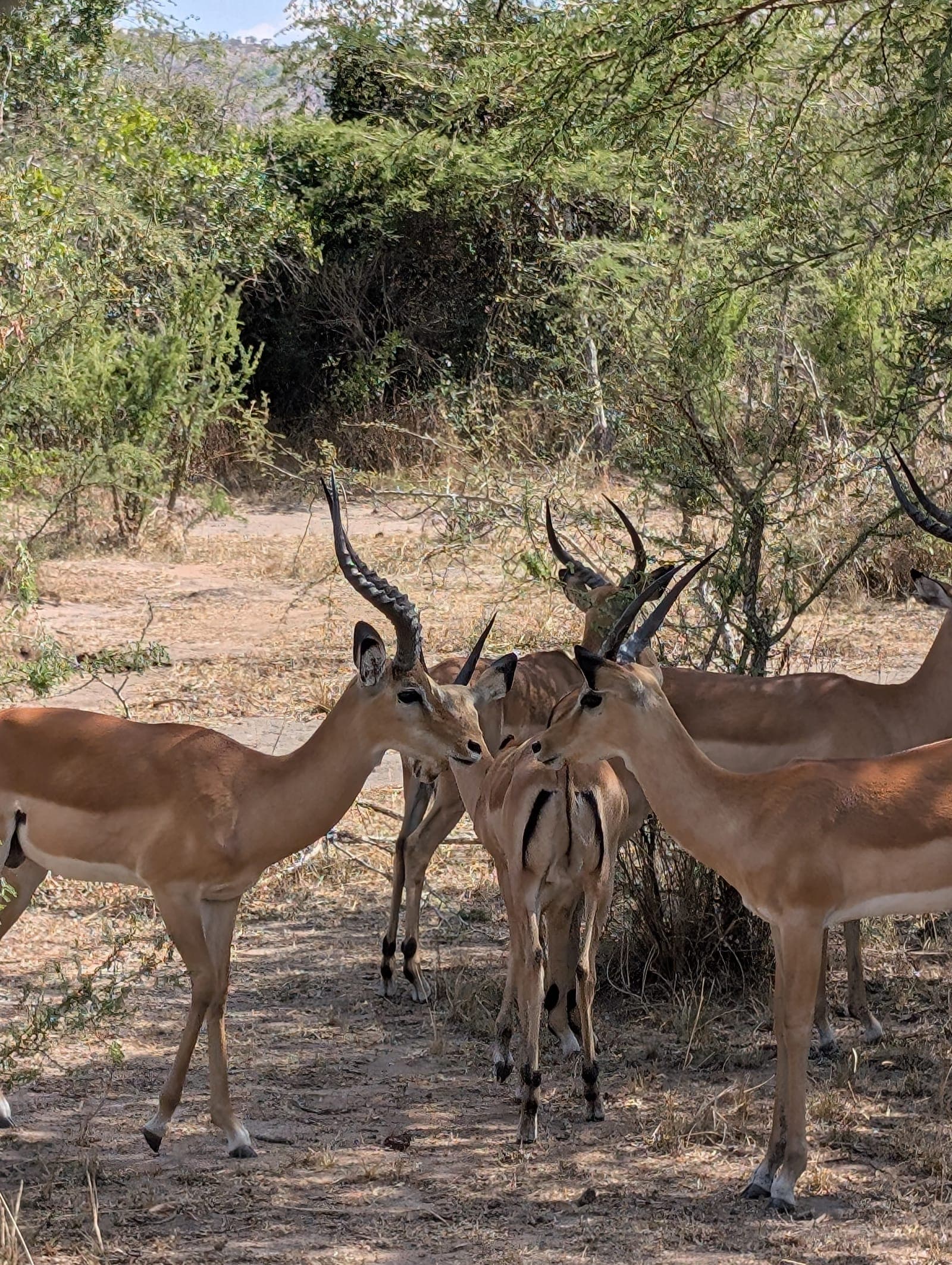
On almost every Rwanda safari in Akagera National Park, someone in the vehicle asks the same question: why are those impala all looking different ways? We took this photo on a hot morning game drive. A small herd had gathered in the shade of the acacia, nose to nose, but each animal had its head and ears pointed somewhere else. It looks like a friendly chat. It is really a security system, and once you understand it, your Rwanda safari becomes far more exciting to watch.
- Impala stand facing different directions so the herd can watch all around it at once.
- More eyes and ears mean a lion, leopard or hyena is spotted sooner.
- One alarm snort sends the whole herd leaping away in many directions, which confuses a hunter.
- Akagera is the only savannah park in Rwanda, so it is where a Rwanda safari shows you this behaviour.
- Watch the impala closely: when they all freeze and stare one way, a predator may be near.
The Question Every Rwanda Safari Guest Asks in Akagera
Akagera is the only savannah park in Rwanda, and impala are among the first animals you meet after the gate. People expect the lions, elephants and rhinos to be the stars of a Rwanda safari. Yet many guests remember the impala, because they are close, easy to watch and full of small habits that tell a story.
The habit that surprises people most is the one in our photo. The impala are standing tight together, but no two of them look the same way. One watches the road, one watches the bush behind, one faces the open ground on the left and another the trees on the right. Even the young one in the middle, with its back to the camera, is listening behind it.
If Akagera is new to you, our Rwanda safari homepage explains how a trip here fits with gorilla trekking in the north.
The Answer: They Are Guarding Each Other From Predators
Look at the ears in the photo
Each impala has its ears turned to a different side. Even when an animal looks relaxed, its ears are working like a radar for the sound of a lion's step or a twig breaking.
An impala has no claws, no thick skin and only the males carry horns. Its defence is to notice danger early and run. A single impala can only see so much: its eyes sit on the sides of its head and give a wide view, but there is always a blind spot behind it. When the herd stands in a loose ring with heads turned every way, each animal covers someone else's blind spot. Together they see in every direction at once.
Scientists call this the many eyes effect. The more animals there are watching, the sooner a hunter is spotted, and the less time each impala has to spend looking up. That means every animal can rest, chew and stay cool in the shade while the group still keeps watch. It is teamwork, and on a Rwanda safari you can see it happen in front of you.
- Eyes: set on the sides of the head for a wide view across the grass.
- Ears: large and turning on their own, often pointing a different way from the eyes.
- Nose: impala sniff the wind, so they often stand with some heads facing upwind.
- Shade: in the midday heat the herd rests under acacia, but someone is always on watch.
Who Hunts Impala in Akagera?
Impala are a favourite meal for many hunters, and Akagera has them all again. Lions were brought back to the park in 2015 after years without them, and their numbers have grown. Leopards hunt in the thick bush and along the lakes, and spotted hyenas and side-striped jackals take young impala. Large pythons hide near the water too.
Most of these predators hunt by surprise. A lion needs to get close before it charges, and a leopard waits in cover. If one impala spots the hunter first, the surprise is lost. That is why the ring of watching heads works so well, and why a calm herd of impala often tells your guide that no lion is near. On a Rwanda safari, the impala are part of how we find the big cats.
 Recommended tour2 day Rwanda safari in Akagera with a sunset boat trip · 2 daysFrom $690 pp
What Happens When One Impala Sees Danger
When an impala sees or hears something wrong, it freezes and stares. Others turn to look the same way. If the danger is real, it gives a sharp snort or bark, and the whole herd explodes into action. Impala can jump around 3 metres high and cover up to 10 metres in one bound. They scatter in different directions, so a hunter cannot pick one target. Some kick their back legs high as they run, which may also leave a scent trail for the herd to follow.
Look at the rear view of the impala in the centre of our photo. The black stripes on the tail and thighs form a pattern that helps the herd keep sight of each other when they run through the bush. Small details like this turn an ordinary Rwanda safari game drive into a real wildlife lesson.
How to Read the Herd on Your Own Rwanda Safari
Tip for photographers
Impala rest in the shade in the hottest hours, so mid-morning is a good time for close portraits like ours. For action, go out early or late, when predators are most active.
Once you know what to look for, impala become your own early warning system. Your guide will slow down when a herd behaves in a strange way, and you can watch for the same signs from the vehicle.
- Heads in every direction, animals feeding or resting: all is calm.
- Every head turned the same way, ears forward: something has their attention. Look where they look.
- Snorting, stamping or tail flicking: they have seen a predator.
- Sudden leaping and scattering: a hunt may be happening. Keep your camera ready.
- Baboons or vervet monkeys calling nearby: they often warn of a leopard too.
Seeing Impala on an Akagera Rwanda Safari
Impala live in the open woodland and grassland of Akagera, especially in the south and centre of the park, near the lakes and along the main game drive tracks. You do not need luck to see them. A day trip from Kigali is enough, but two or three days let you see the herds at dawn, at midday rest and at dusk, when the predators start to move.
Our 2 day Akagera Rwanda safari includes game drives and a boat trip on Lake Ihema, and the Akagera day trip is ideal if you have only one day. Before you book, check the current Akagera National Park entrance fee and our guide to Rwanda safari animals for the full list of what lives in the park.
FAQ
Why do impala stand facing different directions?
They are watching out for each other. Each impala covers a different side, so the herd can see and hear danger from every direction while the others rest or feed. It is one of the best things to watch on a Rwanda safari in Akagera.
Where can I see impala in Rwanda?
In Akagera National Park in eastern Rwanda, about two to three hours by road from Kigali. It is the only savannah park in the country, and impala are common there all year.
What animals hunt impala in Akagera?
Lions, leopards, spotted hyenas, jackals that take young impala, and large pythons near the water. Lions returned to Akagera in 2015, which is why the impala stay so alert.
Do all impala have horns?
No. Only male impala grow the long, curved horns. Females and young are hornless, like the animal in the middle of our photo.
How many days do I need for an Akagera Rwanda safari?
One day is enough to see impala, zebra, buffalo and hippos. Two or three days give you a better chance of seeing lions, elephants and rhinos, plus early morning and late afternoon game drives.